EIFS Stucco Repair in St. Petersburg: What Owners Should Know
EIFS stucco repair in St. Petersburg, FL. Learn how synthetic stucco fails, why moisture at penetrations is the real risk, and what a correct repair involves.
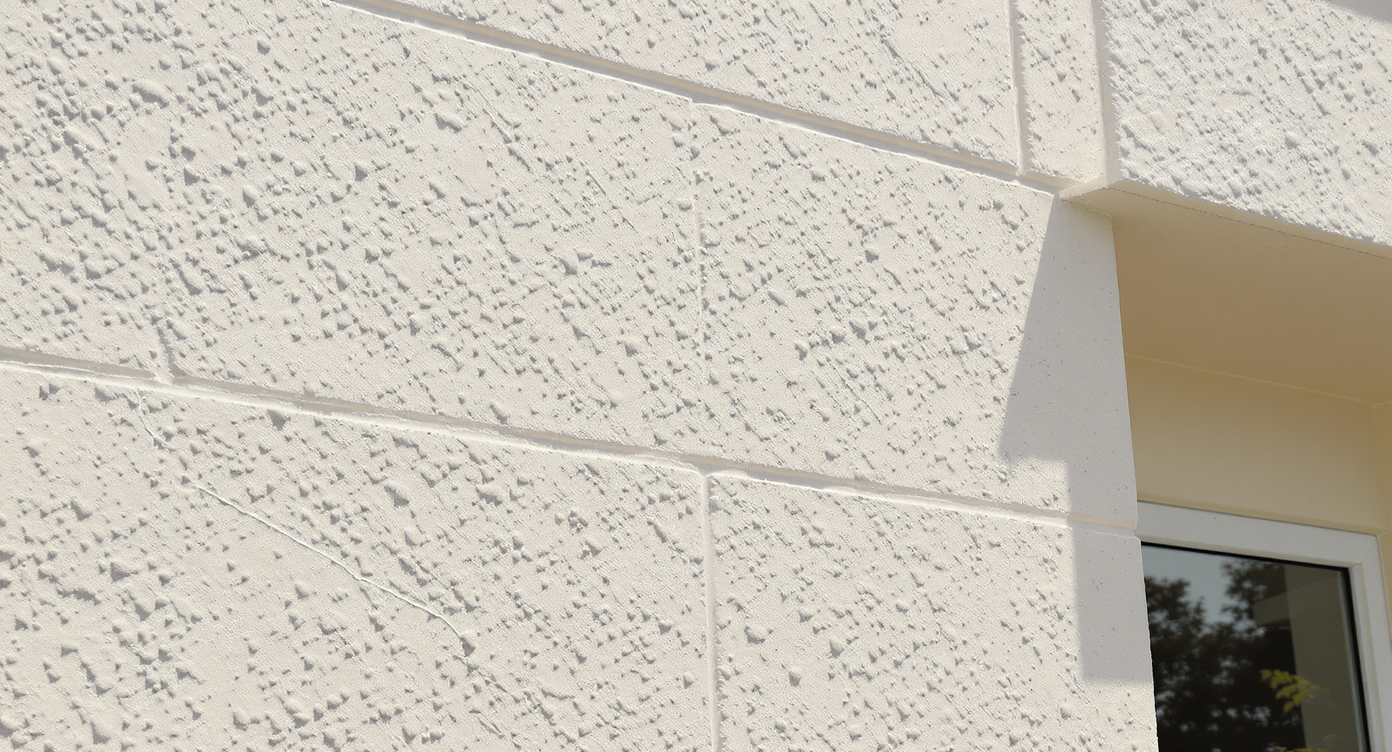
EIFS stucco repair in St. Petersburg is different from patching traditional cement stucco, because EIFS is a sealed, layered system where the real damage almost always hides behind an intact-looking surface. EIFS — Exterior Insulation and Finish System, sometimes called synthetic stucco — insulates well and resists surface cracking, but its low breathability means trapped water becomes the central problem rather than the visible crack.
How EIFS Is Built — and Where It Fails
A traditional stucco wall is Portland cement applied in coats over metal lath. EIFS is a fundamentally different assembly: a foam insulation board is adhered to the substrate, a base coat embedded with fiberglass reinforcing mesh goes over the board, and a flexible acrylic finish coat tops it off. That construction gives EIFS better energy performance and far more crack resistance than cement stucco.
The tradeoff is moisture behavior. Cement stucco breathes and dries; barrier-style EIFS does not. When water gets behind the system, it has nowhere to go. And in the vast majority of EIFS failures, water does not come through the field of the wall — it enters at penetrations: window and door perimeters, hose bibs, exterior light fixtures, deck ledger attachments, and control joints where sealant has failed. Once inside, that water can quietly rot sheathing and framing while the finish surface still looks perfect.
Why St. Petersburg's Climate Raises the Stakes
The Pinellas County environment is unusually hard on any wall system that traps moisture. St. Petersburg sits on a peninsula between Tampa Bay and the Gulf, with summer humidity around 75 percent and two to three tropical systems per season from June through November. Wind-driven rain during those storms is driven into transitions and gaps that shed water fine in a calm shower.
Hurricane Ian in 2022 and Hurricane Idalia in 2023 both affected the region and exposed exactly this kind of concealed damage on EIFS-clad buildings — surfaces that appeared sound but held saturated sheathing behind failed window seals. The region's high termite pressure, driven by the humid subtropical climate, compounds the problem: wet, concealed framing is exactly the condition that invites decay and pests.
What a Correct EIFS Repair Involves
Proper EIFS repair treats the water source, not just the surface. The sequence looks like this:
- Moisture assessment first. A contractor probes or meters suspect areas — below windows, at wall bases, and around penetrations — to map how far the moisture has traveled. EIFS conceals damage, so this step defines the true scope.
- Cut back to sound, dry material. The affected foam, mesh, and base coat are removed to a clean, dry perimeter. Rebuilding over wet material simply re-traps the problem.
- Replace damaged sheathing and framing. Any rotted substrate is removed and rebuilt before the system goes back on.
- Correct the actual leak path. This is the step cheaper repairs skip. The window flashing, sealant joint, or penetration detail that let water in is rebuilt correctly — often with backer rod and a proper sealant joint — so the repair does not simply fail again at the same spot.
- Rebuild the layers and match the finish. Insulation board, mesh-reinforced base coat, and acrylic finish are reinstalled and textured to match the surrounding wall.
Where moisture damage is widespread or the original installation was systemically poor, a contractor may recommend converting to a drainage-style EIFS that gives incidental water a path to escape rather than sealing it in.
St. Petersburg-Specific Considerations
Much of coastal Pinellas County falls in a wind-borne debris region under the 2023 Florida Building Code, which sets elevated standards for envelope details, glazing, and moisture management on exterior walls. A permitted EIFS repair has to meet current code, and the flashing and sealant details around windows are precisely where code and real-world water intrusion overlap. Under Florida Statute 489.113, the substrate and framing work these repairs typically require must be performed by a licensed contractor.
EIFS also appears frequently on light-commercial and multi-family buildings around St. Petersburg, where a single failed detail can affect several units. Catching and correcting it early keeps a localized repair from becoming a building-wide remediation.
Florida Construction Specialists holds license CBC1262722 and has performed exterior envelope, stucco, and restoration work across St. Petersburg, Tampa, Clearwater, Sarasota, and the wider Tampa Bay region since 1982. The firm works as always-prime contractor with an in-house engineer and architectural draftsman, so moisture assessment, structural repair, and permitted drawings stay under one roof.
Concerned about EIFS on your St. Petersburg property? Call (813) 420-7561 or schedule an assessment online. Learn more about our stucco repair services and exterior waterproofing work.
Frequently Asked Questions
What is EIFS and how is it different from traditional stucco?
EIFS stands for Exterior Insulation and Finish System — a multi-layer synthetic stucco. Instead of Portland cement over lath, EIFS bonds a foam insulation board to the wall, then a base coat reinforced with fiberglass mesh, then a flexible acrylic finish coat. It insulates better and resists cracking, but because it is far less breathable than cement stucco, any water that gets behind it can become trapped.
Why does EIFS fail in Florida's climate?
Almost all EIFS problems trace to water intrusion at penetrations — windows, doors, hose bibs, light fixtures, and control joints — rather than the field of the wall. In a humid, storm-exposed market like St. Petersburg, wind-driven rain finds unsealed transitions, and because barrier-style EIFS has no drainage path, trapped moisture can rot sheathing and framing behind an intact-looking surface.
Can EIFS be repaired, or does it need full replacement?
Localized EIFS damage can usually be repaired by cutting back to sound material, replacing wet sheathing, and rebuilding the layers with proper flashing and sealant at the penetration that caused the leak. Widespread moisture damage or a systemically poor original installation sometimes warrants converting to a drainage-style system. A qualified contractor determines which after a moisture assessment.
How do I know if my EIFS has hidden moisture damage?
Warning signs include soft or spongy spots when you press the surface, staining below windows or at wall bottoms, finish that is cracking or delaminating near penetrations, and a hollow sound near joints. Because EIFS hides damage well, a contractor often uses a moisture meter or probe test at suspect areas rather than relying on visual inspection alone.
Does EIFS repair in St. Petersburg require a licensed contractor?
Structural or substrate-level EIFS repair does. Under Florida Statute 489.113, work that cuts into sheathing, replaces framing, or requires a permit must be performed by a licensed contractor. Given that EIFS failures usually involve concealed moisture and framing damage, a licensed general or building contractor with envelope experience is the right choice.
Ready to start your St. Petersburg project?
Florida Construction Specialists is Tampa Bay's premier general contractor for large-scale commercial, residential, and restoration projects. Call us for a no-pressure consultation.