
Stucco Repair DIY in St. Petersburg: What You Can and Can't Do Yourself
A practical guide to DIY stucco repair in St. Petersburg, FL — which cracks and holes you can patch yourself, the right steps, and when to call a pro.
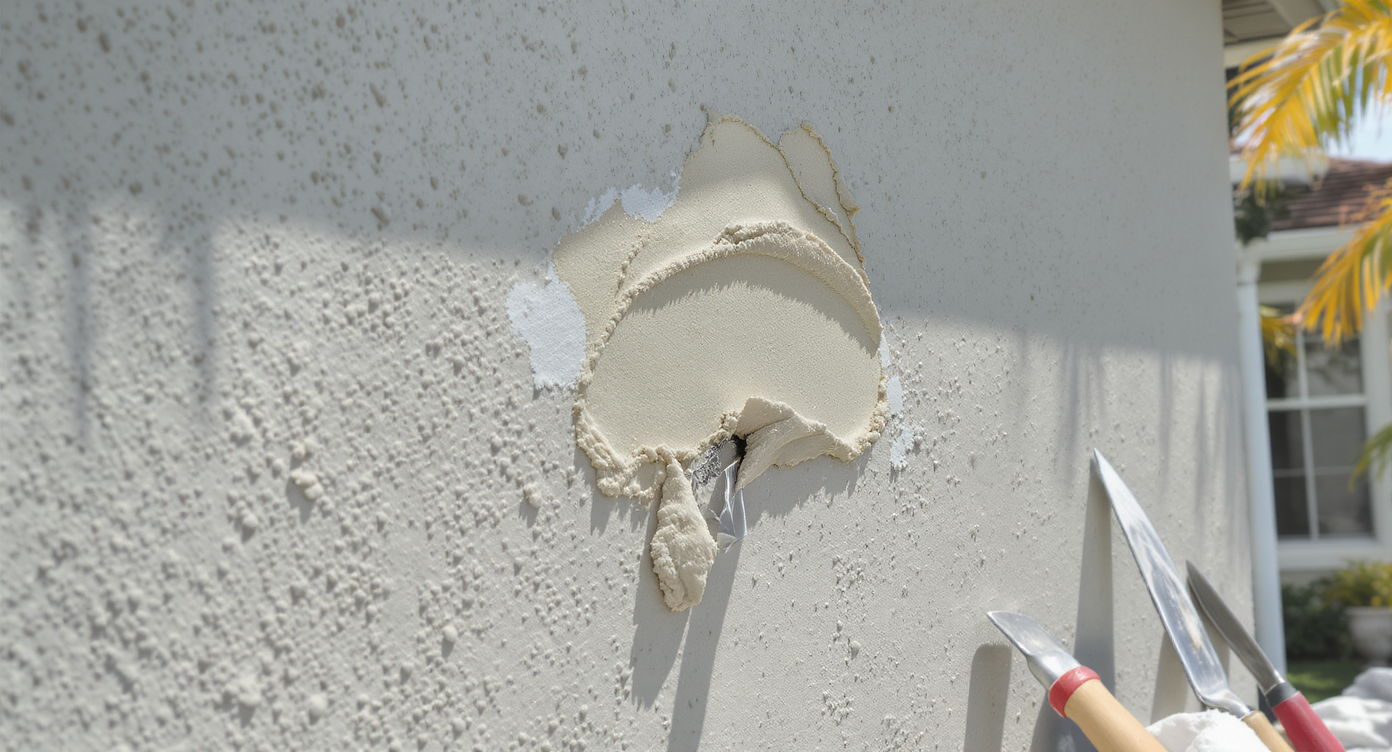
Yes, you can repair minor stucco damage yourself in St. Petersburg — hairline cracks, small chips, and a shallow hole in an otherwise sound wall are all reasonable weekend projects. The catch is knowing the line: surface cosmetics are fair game, but anything that signals movement, moisture, or substrate failure needs a licensed contractor, because a DIY patch over those problems hides them rather than fixing them.
Damage You Can Reasonably Patch Yourself
The safe DIY zone is cosmetic damage on a wall that is otherwise solid. Before you start, tap the area around the damage with your knuckles or a plastic tool. A solid, consistent thud means the stucco is well bonded and the damage is likely surface-only. A dull, hollow, drum-like sound means the stucco has separated from its substrate — stop there, because that is not a patching job.
Good candidates for DIY:
- Hairline cracks in the finish coat that do not run from window or door corners.
- Small chips and dings where the finish is knocked off but the base is intact.
- Shallow holes — for example where a fixture or fastener was removed — a few inches across.
The Basic DIY Repair Steps
For a hairline crack, clean the crack with a wire brush, blow out the dust, and fill it with a paintable elastomeric patching compound or a quality exterior stucco caulk. Tool it flush, let it cure fully, then paint to match with an exterior coating rated for Florida sun.
For a small hole, the sequence is:
- Clean and undercut. Wire-brush loose material out of the hole and remove any crumbling edges so the patch has sound stucco to grip.
- Dampen the area. Lightly mist the surrounding stucco so it does not pull moisture out of your patch too fast — important in Florida heat.
- Fill in layers. Use a pre-mixed stucco patch or stucco mix on a hawk and press it in with a trowel. For a deeper hole, fill in two passes rather than one thick coat, letting the first set before the second.
- Match the texture. Before the final coat fully sets, replicate the surrounding finish — a sponge, brush, or float creates dash, sand, or swirl textures. This is the step that makes a repair invisible or obvious.
- Cure, then paint. Let the patch cure per the product instructions — do not rush it in direct sun — then paint to match.
The two mistakes that sink most DIY repairs are rushing the cure and skipping the texture match. In St. Petersburg's heat and humidity, a patch dried too fast in full sun will craze and crack as it sets, so work in shade or in the cooler part of the day and respect the cure times.
When to Stop and Call a Licensed Contractor
Some conditions are not DIY at any skill level, because the visible damage is a symptom of a problem behind the wall. Call a professional if you find:
- Diagonal cracks from window or door corners — a sign of movement or substrate failure, not surface wear.
- Hollow-sounding sections — the stucco has delaminated and water is likely behind it.
- Efflorescence — white mineral staining weeping from a crack means water is actively moving through the wall system.
- Soft, bubbling, or delaminating finish — moisture has gotten between the layers.
- Any storm-related damage you want to document for an insurance claim.
These point to moisture or structural issues, and Florida's climate makes them worse fast. Under Florida Statute 489.113, structural repairs and any work requiring a permit must be performed by a licensed contractor — and permitted exterior work in coastal Pinellas must meet the 2023 Florida Building Code.
St. Petersburg-Specific Considerations
The Pinellas County climate is unforgiving to shortcuts. Summer humidity around 75 percent, salt air off Tampa Bay and the Gulf, and two to three tropical systems per season from June through November mean a cosmetic patch over a real moisture problem buys weeks, not years. St. Petersburg's older neighborhoods raise the bar further: the Historic Old Northeast, Kenwood, and Roser Park hold homes with traditional three-coat Portland cement stucco over wire lath, where matching the original aggregate and texture is genuinely difficult and mismatched patches are permanent eyesores. For those walls — and for anything beyond a small cosmetic fix — the repair belongs with a contractor experienced in Florida stucco and historic restoration.
Florida Construction Specialists holds license CBC1262722 and has performed stucco and exterior restoration across St. Petersburg, Tampa, Clearwater, and the wider Tampa Bay region since 1982, working as always-prime contractor with in-house engineering and drafting.
Not sure whether your St. Petersburg stucco is a DIY job or a call to a pro? Call (813) 420-7561 or request an assessment online. Learn more about our stucco repair services.
Frequently Asked Questions
What kind of stucco damage is safe to repair yourself?
Hairline surface cracks, small chips, and minor holes in an otherwise sound wall are reasonable do-it-yourself projects. If the surrounding stucco is solid when tapped, the substrate is dry, and the damage is cosmetic, a homeowner with patience can patch it. Anything involving movement cracks, hollow sections, or moisture belongs with a licensed contractor.
What do I need to patch a small stucco crack or hole?
For hairline cracks, a paintable elastomeric patching compound or a quality exterior stucco caulk works. For small holes, you'll want a pre-mixed stucco patch or a bag of stucco mix, a hawk and trowel, a wire brush, a margin trowel for detail, and a texture brush or sponge to match the finish. Clean the area, remove loose material, and follow the product's cure times exactly.
When should I stop and call a professional in St. Petersburg?
Stop if you find diagonal cracks running from window or door corners, sections that sound hollow when tapped, white mineral staining weeping from a crack, soft or bubbling finish, or any sign of moisture. These indicate substrate or structural problems that a surface patch will hide rather than fix. Under Florida Statute 489.113, structural or permitted repairs require a licensed contractor.
Why does DIY stucco repair fail so often in Florida?
Most DIY failures come from patching over a problem instead of fixing its cause, or from rushing cure times in Florida's heat and humidity. A patch bonded to failing stucco fails on the same schedule as the material beneath it, and a fast-dried patch in direct sun cracks as it cures. Surface work also does nothing for moisture already trapped behind the wall.
Can I DIY stucco repair on an older St. Petersburg home?
Be cautious. Homes in the Historic Old Northeast, Kenwood, and Roser Park often have traditional three-coat Portland cement stucco over wire lath, which needs its aggregate, mix, and texture matched to the original. Modern pre-mixed patches rarely blend well on historic finishes, and mismatched repairs are visible and hard to undo. These walls usually justify a contractor experienced with historic materials.
Ready to start your St. Petersburg project?
Florida Construction Specialists is Tampa Bay's premier general contractor for large-scale commercial, residential, and restoration projects. Call us for a no-pressure consultation.