Where Can I Find Stucco Repair Near Me in St. Petersburg?
Find licensed stucco repair near you in St. Petersburg, FL. Learn the warning signs, what a correct repair involves, and why Pinellas coastal expertise matters.
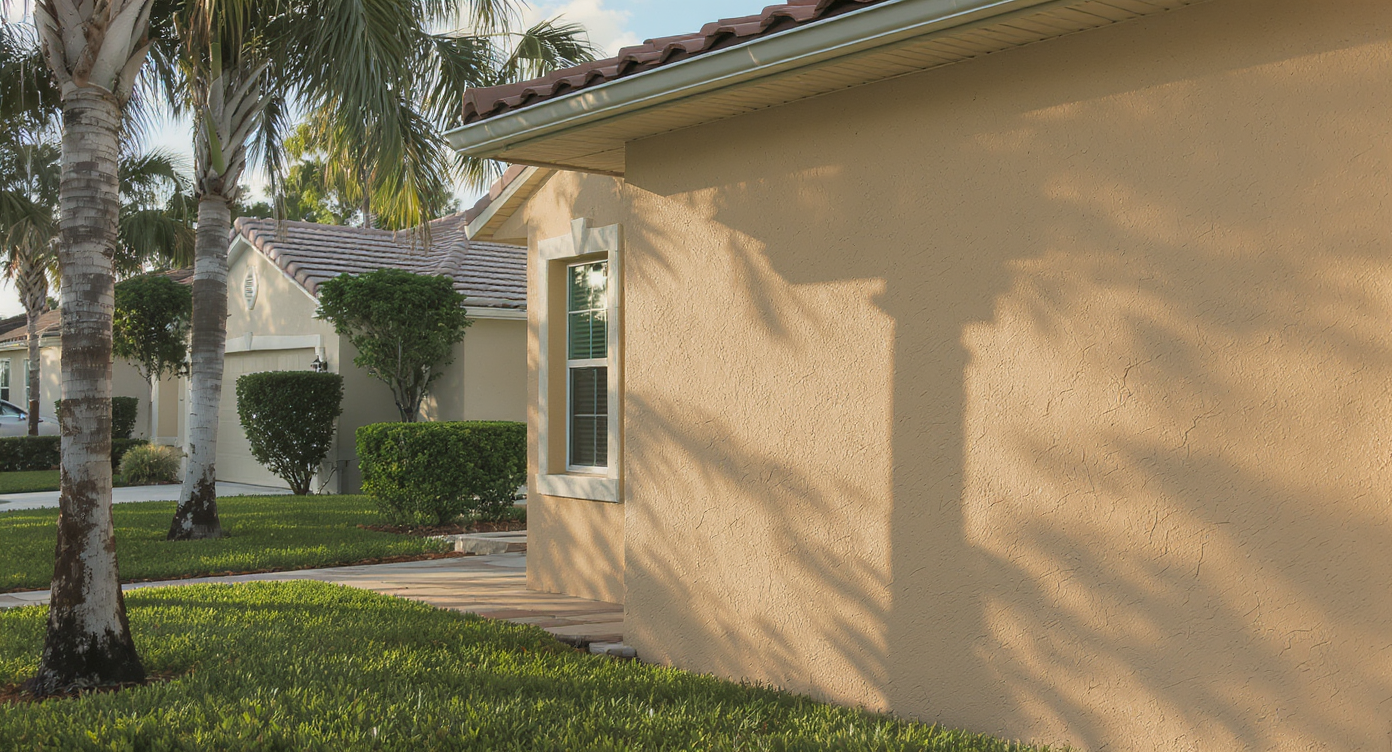
When you search for stucco repair near you in St. Petersburg, the local results vary widely in licensure and Florida-specific experience. The right contractor understands why stucco fails on a Gulf-side peninsula, what is usually hiding behind the visible damage, and what a correct repair looks like from substrate to finish coat.
Signs Your St. Petersburg Stucco Needs Repair Now
Not every stucco issue is urgent, but the Pinellas County climate means damage that looks minor in spring can be hiding real moisture intrusion by the time summer storms arrive. Watch for these specific conditions:
Diagonal cracks from window and door corners are among the most reliable signs of a problem below the surface. They typically signal movement — settlement, poor control-joint placement, or substrate failure — and almost always require cutting back to sound material rather than patching the face.
Hollow or soft sections, found by tapping the surface, produce a dull, drum-like sound instead of a solid thud. That means the stucco has separated from its substrate and water is likely pooling in the void. Left alone, the section eventually cracks through, and by then the sheathing or framing behind it is often compromised.
Efflorescence — the white mineral staining that weeps from cracks — shows that water is actively moving through the wall system. The deposit itself is harmless, but it reliably signals that moisture infiltration is already underway.
Bubbling or delaminated finish coat means moisture has gotten between layers of the stucco system and is pushing the surface off the base coat beneath. This is past the warning stage.
St. Petersburg's humid subtropical climate — summer humidity around 75 percent and a storm season running June through November — means moisture damage tends to accelerate once it starts. Hurricane Ian in 2022 and Hurricane Idalia in 2023 both affected the Tampa Bay region and left a long tail of wind-driven rain damage across Pinellas County. Properties with unrepaired cracks before those storms often discovered the sheer volume of water a stucco system channels under sustained wind-driven rain.
What a Proper Stucco Repair Involves
The most common mistake in stucco repair is cosmetic patching over a failing system. Skim-coating delaminated sections or caulking cracks without finding their cause buys months, not years — and often traps moisture that had been weeping out, making the underlying problem worse.
A correct St. Petersburg stucco repair follows this sequence:
- Full surface assessment first. The contractor probes and taps the entire affected area before any demolition. A surface crack may be the visible edge of a much larger delaminated section.
- Cut back to sound material. The repair perimeter is set at clean, well-bonded stucco. Patching bonded to failing material fails on the same schedule as the material beneath it.
- Address substrate damage before recoating. Rotted sheathing, corroded lath, and degraded moisture barriers are repaired at this stage. Skipping substrate repair is the single most common reason stucco repairs fail within a year — and the region's high termite pressure, driven by the humid subtropical climate, makes substrate inspection especially important.
- Apply coats in proper sequence and cure time. Scratch coat, brown coat, finish coat — each needs adequate cure before the next. Rushing this creates differential movement that opens new cracks.
- Match the existing finish and seal the system. The finish coat is matched to the surrounding texture and sealed with an elastomeric coating rated for Florida UV and moisture. A poor coating fails the finish from the outside even when the repair underneath was done right.
Why Local Pinellas Expertise Matters
Stucco repair in St. Petersburg takes more than general plastering experience. Salt air off Tampa Bay and the Gulf, summer humidity near 75 percent, tropical storm cycling, and high termite pressure create failure modes contractors from drier regions rarely see. The 2023 Florida Building Code also sets elevated structural and moisture-management standards across coastal Pinellas, so any permitted repair must meet current code even on an older home.
St. Petersburg's older neighborhoods add complexity. The Historic Old Northeast, Kenwood's bungalow district, and Roser Park contain homes finished with traditional three-coat Portland cement stucco over wood-framed walls and wire lath. That material behaves differently from modern one-coat synthetic systems, and matching the aggregate, mix ratio, and texture to the original takes hands-on experience with historic materials. For those properties, stucco work and historic restoration belong with the same experienced contractor.
Under Florida Statute 489.113, structural stucco repair must be performed by a licensed contractor. Verify any contractor's license through the Florida DBPR public lookup before work begins.
St. Petersburg-Specific Considerations: Insurance and Documentation
If your stucco damage followed a named storm, documentation matters as much as the repair. Florida Statute 627.70132 gives property owners one year from the date of loss to file a hurricane claim — two years for other perils. Repairs started before a licensed contractor documents the damage and its cause can complicate or void a valid claim. Get a written assessment first.
Florida Construction Specialists has performed stucco and exterior restoration across Tampa Bay since 1982. We work as always-prime contractor — no subcontracting layer between you and the crew — and our in-house engineer and architectural draftsman handle structural assessments and permitted drawings internally.
Ready to have your St. Petersburg stucco assessed? Call (813) 420-7561 or schedule a consultation online. Learn more about our stucco repair services and disaster recovery work.
Frequently Asked Questions
How do I know if my stucco damage needs a licensed contractor?
Any stucco repair that cuts into the substrate, replaces damaged sheathing or lath, or involves permitted work must be performed by a licensed contractor in Florida. Under Florida Statute 489.113, a certified contractor holds statewide authority. For structural or moisture-related stucco failures — not surface-only touch-ups — a licensed general or building contractor is the right call.
What stucco warning signs should St. Petersburg homeowners watch for after a storm?
After any tropical weather, walk your exterior for new diagonal cracks running from window or door corners, sections that sound hollow when tapped, white mineral staining weeping from cracks, and areas where the finish coat has bubbled or separated. Wind-driven rain forces water into cracks that would be harmless in calm conditions, so damage that looks cosmetic can hide active moisture intrusion.
Why does stucco fail faster in St. Petersburg than in drier climates?
St. Petersburg sits on a peninsula between Tampa Bay and the Gulf, with summer humidity around 75 percent and two to three tropical systems per season from June through November. Salt air accelerates corrosion of the metal lath in traditional stucco — rust expands and fractures the surrounding material from within — while daily thermal cycling works existing cracks wider. That combination is far more aggressive than stucco faces inland.
Does stucco repair in St. Petersburg require a permit?
It depends on scope. Surface patching and repainting are usually maintenance items that do not need a permit. Work involving structural substrate repair, large-area recoating, or new lath and moisture barriers generally requires a permit through the City of St. Petersburg or Pinellas County. A licensed contractor can determine the threshold and pull the permit for you.
How long has Florida Construction Specialists been repairing stucco in the area?
Florida Construction Specialists has performed stucco and exterior restoration across the Tampa Bay region since 1982 — more than 44 years in the market. The firm operates as always-prime contractor, with no subcontracting layer between you and the crew doing the work, and holds Florida contractor license CBC1262722.
Ready to start your St. Petersburg project?
Florida Construction Specialists is Tampa Bay's premier general contractor for large-scale commercial, residential, and restoration projects. Call us for a no-pressure consultation.