Storm & Disaster Recovery:
The Insurance Expert's Contractor
When disaster strikes your commercial property or high-value home, you need a contractor who truly understands insurance claims—from both sides of the process.
FCS brings 43 years of insurance industry experience: 7 years as an Allstate adjuster, 28 years operating a statewide insurance restoration firm, and deep expertise in large loss claims from $250,000 to $25 million. With OSHA-certified safety associates on staff, we speak insurance fluently because we've lived it.
The Contractor Insurance Companies Respect
Florida Construction Specialists occupies a unique position in the disaster recovery industry. Our founder's career began in 1982 as a field adjuster for Allstate Insurance, spending seven years evaluating claims, determining coverage, and understanding exactly how carriers assess damage and process large losses. That insider knowledge became the foundation for a 28-year career operating a statewide insurance restoration firm that became a trusted name for major carriers throughout Florida.
This dual perspective—having worked both as the adjuster evaluating claims AND as the contractor rebuilding properties—is extraordinarily rare in the construction industry. Most contractors learn insurance processes through trial and error. We learned them from the inside, understanding not just what adjusters look for, but why they look for it, how coverage decisions are made, and what documentation actually supports claim approval.
Today, FCS serves as the prime general contractor for large loss disaster recovery throughout Tampa Bay. We specialize in commercial properties, municipal buildings, and high-value residential reconstruction—the complex projects where insurance expertise matters most. Our portfolio includes hurricane damage totaling tens of millions of dollars, major fire losses, flood recovery, and complete property rebuilds.
When you hire FCS, you're not just hiring a contractor. You're hiring 43 years of claims experience that helps ensure your property is properly documented, your claim is fairly evaluated, and your restoration meets both insurance requirements and building codes. We've handled claims as the adjuster, we've built claims as the contractor, and we've navigated disputes through appraisal and arbitration. This comprehensive experience translates to smoother projects, faster claim resolution, and more complete settlements for our clients.
For property owners facing significant disaster damage, FCS represents the rare combination of construction excellence and insurance expertise. We understand that disaster recovery isn't just about rebuilding—it's about navigating a complex process while protecting your financial interests. That's what 43 years of insurance industry experience enables us to do.
When Disaster Strikes, We Respond
43 years of insurance restoration experience at your service
Hurricane Damage Restoration
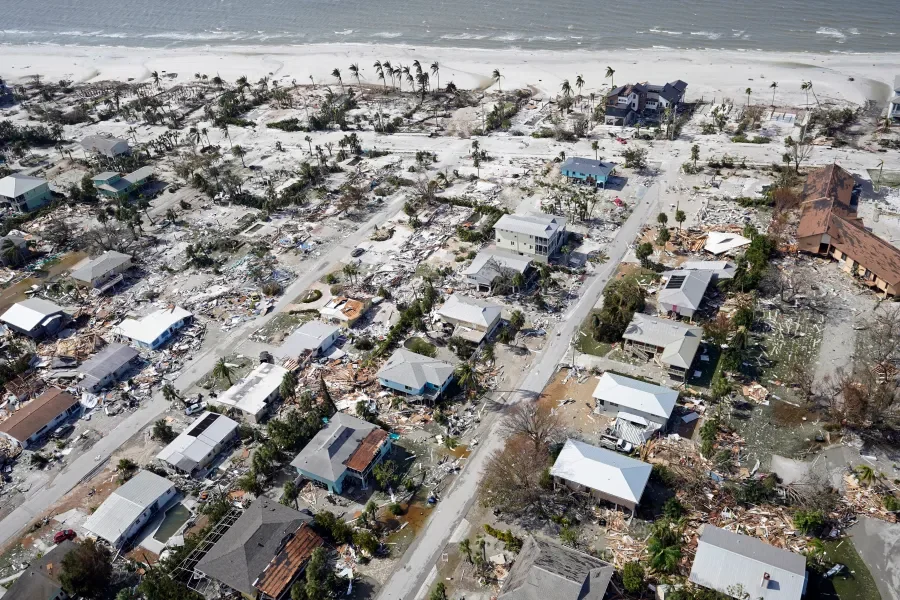
Florida's hurricane season brings the potential for catastrophic property damage every year. From June through November, commercial and residential property owners face the risk of wind damage, water intrusion, structural failure, and complete property loss. FCS has restored properties after every major hurricane to impact Tampa Bay and Central Florida, accumulating extensive experience with hurricane damage assessment, insurance claims, and reconstruction.
Understanding Hurricane Damage Categories
Hurricane damage presents in multiple forms, often simultaneously, making accurate assessment critical for proper claim documentation. Direct wind damage occurs when sustained winds or gusts physically impact the structure—tearing off roofing materials, breaking windows, collapsing walls, or causing structural movement. This damage is typically covered under standard property insurance policies, though deductibles for hurricane damage are often calculated as a percentage of the building's insured value rather than a flat amount.
Wind-driven rain creates a secondary damage category that many property owners don't fully understand. When wind damages the building envelope—even small openings like a missing shingle or compromised flashing—rain can enter the structure. This water damage is generally covered as part of the windstorm claim because the wind created the opening that allowed water entry. However, distinguishing wind-driven rain damage from flood damage becomes critical for coverage determination. Flood damage requires separate flood insurance coverage.
Structural damage from hurricanes ranges from obvious (collapsed sections, shifted walls) to subtle (racked door frames, cracked foundations, compromised connections). Our assessment protocols examine not just visible damage but indicators of structural movement that may affect long-term building integrity. This includes checking door and window operations, examining wall-to-roof connections, evaluating foundation condition, and assessing the structural diaphragm.
Roof Damage Assessment
Roofing systems suffer the most hurricane damage, and proper assessment requires understanding both obvious and hidden damage patterns. Visible damage includes missing shingles or tiles, damaged flashing, compromised ridge caps, and torn underlayment. However, significant damage often isn't visible from the ground or even from a casual roof inspection.
Wind can damage shingles without removing them—breaking the seal strip that holds shingles in place, causing granule loss that reduces shingle life, or creating creases that will eventually fail. Metal roofing can sustain panel displacement, fastener loosening, or seam separation. Tile roofs often experience cracked tiles (which may not be visible from above), shifted tiles, and damaged underlayment beneath tiles that appear intact. Built-up and modified bitumen commercial roofing can suffer membrane punctures, seam failures, and flashing damage.
Our roof assessments go beyond visual inspection to include thermal scanning for moisture intrusion, systematic documentation of every roof section, and evaluation against the specific roofing system manufacturer's damage criteria. This thorough approach ensures all roof damage is captured in the initial claim documentation.
Emergency Stabilization: Tarping and Board-Up
After hurricane damage, property owners have a duty to mitigate further damage—and insurance policies require reasonable mitigation efforts. tarping covers roof openings to prevent additional water intrusion. Board-up services secure broken windows, doors, and openings against weather and unauthorized entry. These prompt services are typically covered under the insurance policy as part of the loss.
However, the quality and completeness of emergency work matters significantly. Improper tarping that allows continued water entry, or inadequate board-up that permits additional damage, can complicate claims and may shift some responsibility to the property owner. FCS coordinates with qualified prompt service providers and oversees stabilization efforts to ensure proper protection of the property.
Restoration vs. Rebuild: Critical Decision Points
One of the most important decisions after hurricane damage is whether to restore the existing structure or pursue complete reconstruction. This decision involves insurance coverage, building codes, cost factors, and property owner goals.
Florida Building Code includes a "50% rule" that affects this decision significantly. If the cost to repair damage exceeds 50% of the building's market value (excluding land), the entire building must be brought up to current code—not just the damaged portions. This can transform a straightforward roof replacement into a project requiring window and door upgrades, structural reinforcement, electrical system updates, and other code compliance work.
Insurance coverage also affects this decision. Replacement cost policies may cover complete reconstruction at current standards. Actual cash value policies may only cover depreciated value, potentially making restoration more practical even if rebuilding would be preferred. Code upgrade coverage, if included in the policy, can offset some of the costs when code requirements increase project scope.
FCS provides detailed analysis of both options, including accurate cost estimates, timeline comparisons, and coverage implications. Our experience with building code requirements and insurance coverage helps property owners make informed decisions about the best path forward for their specific situation.
Florida Building Code Requirements
Florida Building Code, 8th Edition (2023)
Section 1609 — Wind Loads
Florida's wind load requirements are the most stringent in the nation, requiring buildings in the Wind-Borne Debris Region to meet enhanced impact-resistance and structural standards for hurricane resilience.
View Florida Building Code →Hurricane repairs in Florida must meet specific building code requirements that vary by location and damage extent. The Wind-Borne Debris Region (WBDR) encompasses areas within one mile of the coast and in designated high-velocity hurricane zones. Properties in the WBDR have stricter requirements for window and door protection, with any replacement windows required to meet impact-resistance standards or be protected by approved shutters.
Roof repairs and replacements must meet current Florida Building Code wind resistance requirements, which have increased substantially since many existing buildings were constructed. This includes enhanced fastening schedules, improved underlayment requirements, and stricter flashing details. When roof covering is removed, secondary water resistance (sealed roof deck) may be required.
FCS maintains current knowledge of Florida Building Code requirements and ensures all hurricane restoration work meets applicable standards. Our in-house engineering capability allows us to evaluate structural requirements and coordinate with local building officials on code interpretation for specific project conditions.
Complete Property Recovery
From structural stabilization to full reconstruction
Flood Damage and NFIP Coverage
Critical Coverage Distinction
Flood insurance through NFIP operates under completely different rules than standard property insurance. Understanding these differences before a flood event can mean the difference between full recovery and significant uninsured losses.
Understanding the National Flood Insurance Program
The National Flood Insurance Program (NFIP), administered by FEMA, provides flood insurance in communities that agree to adopt and enforce floodplain management ordinances. Standard property insurance policies specifically exclude flood damage, making NFIP coverage essential for properties in flood-prone areas—and valuable even for properties outside designated flood zones, since floods can occur anywhere.
NFIP policies come with important coverage limitations that many property owners don't discover until claim time. Maximum coverage limits are $250,000 for residential buildings and $500,000 for commercial buildings, with separate limits for contents coverage. These limits may be inadequate for large commercial properties or high-value homes, creating a need for excess flood insurance from private carriers.
Perhaps more importantly, NFIP policies operate under specific coverage rules that differ fundamentally from standard property insurance. Understanding these rules is essential for proper claim documentation and realistic recovery expectations.
Direct Flood Damage vs. Adjacent Damage: The Critical Distinction
This is one of the most misunderstood aspects of flood insurance, and our 43 years of claims experience has shown us how this distinction affects real claims.
NFIP coverage applies only to direct physical damage from flood water contact. If flood water rises to three feet in your building, NFIP covers the damage to building components and contents that were actually touched by the flood water—from the floor up to the three-foot level. Damage above that level, even if caused by moisture or humidity from the flood event, is NOT covered under NFIP.
This distinction has enormous practical implications. Consider a commercial building where flood water reaches four feet. The drywall, insulation, and electrical components below four feet are covered. But the moisture that migrated upward through the drywall, causing damage and mold growth at the six-foot level, is not covered—even though the flood event caused that moisture to be present. The mold that developed above the flood line due to elevated humidity is not covered.
This "adjacent damage" exclusion means that flood claims often cover significantly less than property owners expect. Total restoration costs might reach $500,000, while NFIP coverage applies to only $300,000 of direct flood contact damage. This gap can be financially devastating for unprepared property owners.
Flood Zone Implications
FEMA flood zone designations affect both insurance requirements and premium costs. Special Flood Hazard Areas (SFHAs)—zones beginning with A or V—represent areas with at least a 1% annual chance of flooding (the "100-year flood"). Properties in SFHAs with federally-backed mortgages are required to carry flood insurance.
Zone designations also affect premium rates substantially. Properties in high-risk zones pay significantly more than those in moderate or low-risk zones. However, zone designation doesn't prevent flooding—properties in Zone X (minimal flood risk) still flood, and many flood claims come from properties outside SFHAs.
For commercial properties, understanding your flood zone affects not just insurance decisions but also building code requirements. Substantial improvement projects in SFHAs may require elevation or other flood mitigation measures. FCS helps property owners navigate these requirements during disaster recovery planning.
Documentation Requirements for Flood Claims
NFIP claims have specific documentation requirements that differ from standard insurance claims. A Proof of Loss form must be submitted within 60 days of the flood event (extensions are sometimes available but must be requested). This signed, sworn statement documents the claimed damages and amounts.
Proper documentation should establish the high-water mark clearly, as this determines coverage limits. Photographs showing water levels on walls, along with documentation of damaged contents at specific heights, support accurate claim determination. Any damaged materials removed before documentation can create claim issues.
FCS assists with comprehensive flood damage documentation, including detailed photography, accurate measurements, and systematic cataloging of damage by location and elevation. Our experience with flood claims helps ensure documentation meets NFIP requirements while capturing all covered damage.
Common Claim Denials and How to Avoid Them
Understanding common reasons for flood claim denials helps property owners avoid these pitfalls:
- Late Proof of Loss: Missing the 60-day deadline without an approved extension results in claim denial. FCS helps coordinate timely documentation submission.
- Earth movement exclusion: Damage from mudslides, sinkholes, or earth movement—even if associated with flooding—is typically excluded.
- Basement limitations: Coverage for basement and below-grade areas is severely limited under NFIP, covering only certain building equipment.
- Exterior property: Landscaping, walkways, swimming pools, and other exterior improvements are excluded.
- Moisture and mold above flood line: As discussed, damage from moisture migration or mold growth above the direct flood contact level is not covered.
- Inadequate documentation: Claims without proper photographs, measurements, and itemized damage lists may be underpaid or denied.
Private Flood Insurance Differences
Private flood insurance has grown substantially as an alternative to NFIP. Private policies may offer higher coverage limits, broader coverage terms, and different pricing than NFIP. Some private policies cover damage that NFIP excludes, including certain mold damage, additional living expenses, and replacement cost coverage.
However, private flood policies vary significantly by carrier. Coverage terms, exclusions, and claims processes differ from NFIP and from each other. Property owners should carefully review policy terms, particularly regarding adjacent damage, mold coverage, and claims documentation requirements.
FCS works with all types of flood insurance coverage and understands the documentation requirements for both NFIP and major private flood carriers. Our experience with flood claims from both the adjuster and contractor perspectives helps ensure proper claim handling regardless of coverage type.
Wind Damage Assessment
Wind damage assessment requires expertise to identify both obvious and hidden damage. Our experience as insurance adjusters taught us exactly what to look for—and what's commonly missed on initial inspections.
Hidden Wind Damage: What Surface Inspections Miss
The most significant wind damage isn't always visible. Surface inspections often miss damage that will cause problems months or years later—or damage that's covered but unclaimed because no one documented it properly.
Roofing damage extends beyond missing shingles. Wind can break the seal strips that hold asphalt shingles flat, creating lifted edges that don't lay properly but might not be obvious from ground level. These unsealed shingles will eventually fail, often causing leaks long after the storm event when they're no longer associated with covered damage. Proper inspection identifies seal strip damage immediately, while it's still part of the covered claim.
Granule loss on asphalt shingles indicates damage even without visible tears or missing material. High winds can abrade shingle surfaces, removing the protective granules that shield the asphalt from UV degradation. This damage shortens shingle life substantially and may warrant replacement under insurance coverage.
Structural movement from wind pressure may not be visible but can affect building integrity. Racked frames cause doors and windows to bind. Shifted walls create cracks that worsen over time. Compromised connections between walls and roof may not fail immediately but represent significant damage that should be documented and claimed.
Comprehensive Roof Inspection Protocols
Our roof inspections follow systematic protocols developed through years of claims experience. We divide the roof into sections for detailed documentation, photograph each section, and note any damage or potential damage. This creates a complete record that supports claim documentation.
Inspection points include: ridge and hip cap condition, all flashing details (wall flashing, valley flashing, vent and pipe flashings), gutter and edge metal condition, individual shingle or tile condition, underlayment exposure or damage, and evidence of previous repairs. For commercial flat roofs, we examine membrane condition, seam integrity, drainage, and penetration seals.
Window, Door, and Opening Damage
Windows and doors represent both damage points and water entry points. Impact damage from wind-borne debris may crack glass, break seals, or damage frames. Wind pressure alone can distort frames, break seal integrity, or compromise weatherstripping. Even without obvious damage, windows and doors that don't operate smoothly after a storm may indicate structural movement affecting the building frame.
Documenting window and door damage is particularly important because replacement requirements in Florida's Wind-Borne Debris Region can significantly affect costs. If damaged windows require replacement, current code requires impact-resistant units or approved shutters—a substantial upgrade from older non-impact windows.
What Adjusters Often Miss
Insurance adjusters handling storm damage face time pressure and volume challenges, especially during catastrophe events when they may inspect dozens of properties daily. This pressure leads to missed damage—not from incompetence but from the practical limitations of rapid assessments.
Common oversights include: seal strip damage on shingles that appear intact, granule loss across large roof areas, flashing damage at difficult-to-access locations, soffit and fascia damage, interior ceiling damage from minor water intrusion, window seal failures, and structural movement affecting door operation.
FCS's detailed documentation and systematic inspection often identifies covered damage that initial adjustments miss. This documentation supports supplemental claims that capture the full scope of covered damage.
Fire Damage Restoration
Fire damage extends far beyond the area of direct flame contact. Comprehensive restoration addresses structural damage, smoke and soot contamination, water damage from firefighting efforts, and the complex insurance claims that accompany significant fire losses.
Comprehensive Fire Damage Assessment
Fire damage assessment begins with understanding how fire affected the structure. Direct flame damage may be limited to certain areas, but heat exposure affects materials well beyond the visible burn area. Elevated temperatures can weaken structural steel, degrade concrete, damage electrical wiring insulation, and compromise roof assemblies even where no visible flame damage exists.
Our assessment includes thermal damage evaluation throughout the structure, not just in obviously fire-damaged areas. We examine structural connections, electrical systems, plumbing (heat can damage PVC piping and weaken solder joints), and building systems that may have been affected by heat exposure.
Smoke and Soot Damage
Smoke and soot travel throughout structures via HVAC systems, natural air movement, and pressure differentials during the fire event. Areas far from the fire origin may have significant smoke contamination requiring professional remediation.
Smoke damage varies by the materials burned. Protein fires (kitchen fires) produce difficult-to-remove residues with strong odors. Synthetic material fires create toxic soot that adheres aggressively to surfaces. Wood fires produce large quantities of particulate. The type of smoke affects cleaning methods and restoration approaches.
Proper smoke damage restoration requires more than surface cleaning. Smoke particles penetrate porous materials, contaminate HVAC systems, and settle in hidden areas. Complete restoration includes thorough cleaning of all surfaces, HVAC system cleaning or replacement, and treatment of structural cavities where smoke accumulates.
Water Damage from Firefighting
Firefighting efforts often cause water damage exceeding the original fire damage. Thousands of gallons of water may flow through a structure during fire suppression, saturating building materials, flooding lower floors, and creating conditions for mold growth if not properly addressed.
This water damage is covered under fire insurance claims—it's part of the fire loss, not a separate event. However, proper documentation of water damage extent, timely water extraction, and appropriate drying are essential. Delayed or inadequate water damage response can lead to secondary damage (mold, deterioration) that may complicate claims.
Structural Evaluation After Fire
Structural evaluation determines whether fire-damaged elements can be repaired or must be replaced. Wood framing exposed to fire requires assessment of char depth and remaining structural capacity. Steel exposed to high temperatures may have lost strength and require replacement. Concrete can spall and weaken from thermal exposure.
FCS's in-house engineering capability allows us to evaluate structural damage and develop appropriate repair or replacement approaches. This professional evaluation supports insurance claim documentation and ensures restoration work addresses all structural concerns.
The Fire Restoration Process
Fire restoration follows a systematic process: structural stabilization (securing the structure, temporary weatherproofing), water extraction and drying, debris removal, structural evaluation, smoke and soot remediation, reconstruction, and final cleaning and restoration. Throughout this process, proper documentation supports the insurance claim, and coordination with adjusters ensures scope agreement before work begins.
Expert Insurance Claim Navigation
43 years experience from both sides of the claims process
The Insurance Claim Process
Navigating insurance claims for large losses requires understanding how the process works, what documentation carriers require, and how to protect your interests throughout. Our 43 years of claims experience—including 7 years as an insurance adjuster—provides insight that most contractors simply don't have.
Documenting Damage Properly
Proper damage documentation begins immediately after the event, before any cleanup, debris removal, or prompt repairs. This initial documentation establishes the condition that will be evaluated for coverage and serves as the foundation for the entire claim.
Photographs should be comprehensive: overall views of each affected area, medium shots showing context, and close-ups of specific damage. Video walkthroughs provide additional context and can capture details that static photos miss. Include photos of undamaged areas as well—this establishes baseline condition for comparison.
Written documentation should include dates and times, damage descriptions, witness information if relevant, and immediate actions taken. Keep all receipts for prompt services, temporary repairs, and mitigation efforts—these costs are typically covered as part of the loss.
For commercial properties, document any business interruption impacts: revenue loss, extra expenses, and operational disruptions. This information supports business interruption coverage claims where applicable.
Working with Your Insurance Carrier
Report claims promptly—most policies require notification "as soon as practicable" after a loss. Delayed reporting can create coverage questions. Provide factual information about the loss without speculating about causes or extent. Request a claim number and adjuster assignment timeline.
Understand your policy before the adjuster visit. Know your coverage limits, deductible amounts (particularly hurricane deductibles, which are often percentage-based), and any special coverage endorsements. If you have replacement cost coverage, understand how it works—many policies pay actual cash value initially, with replacement cost difference paid after repairs are completed.
Be present for adjuster inspections when possible, or have a knowledgeable representative present. Point out damage you've observed, share your documentation, and ask questions about the process and timeline. Adjusters appreciate organized property owners who facilitate the inspection process.
The Adjustment Process Explained
After reporting, your carrier assigns an adjuster to evaluate the claim. This may be a staff adjuster employed by the carrier or an independent adjuster working under contract. For catastrophe events, carriers deploy catastrophe (CAT) teams—adjusters brought in from other areas to handle claim volume.
The adjuster inspects the property, documents damage, and prepares an estimate using industry-standard software (typically Xactimate). This estimate includes line items for labor, materials, equipment, and overhead/profit. The adjuster's estimate represents the carrier's initial position on claim value.
Coverage determination happens separately from damage evaluation. Even documented damage may be excluded if it doesn't fall within policy coverage—this is why understanding your policy matters. The adjuster applies policy terms to determine what portion of documented damage is covered.
Certified Estimates: FCS's Approach
FCS provides certified Xactimate estimates that meet insurance industry standards. These estimates use the same software, pricing databases, and format that adjusters use, allowing direct comparison and negotiation. Our estimates are prepared by personnel with claims background, ensuring they address coverage considerations as well as construction scope.
Certified estimates differ from standard contractor quotes by providing the detail and justification that insurance evaluation requires. Each line item includes scope description, quantity, unit pricing, and justification where relevant. This level of detail supports productive discussion with adjusters and carriers.
Negotiating Fair Settlements
Initial claim estimates often undervalue losses, not necessarily through bad faith but through incomplete information, different damage interpretations, or pricing disagreements. Negotiation is a normal part of the large loss claims process.
Effective negotiation requires documentation, not argument. When we believe a claim is undervalued, we prepare detailed documentation showing why additional scope is warranted. This includes photographs, moisture readings, manufacturer requirements, code citations, and pricing justification. Professional, documented disagreement is far more effective than contentious dispute.
FCS participates in scope meetings with adjusters, reviewing the claim together and reaching agreement on disputed items. Our background as adjusters helps—we understand what adjusters can approve, what requires supervisor involvement, and how to present information effectively.
When to Involve Public Adjusters
Public adjusters represent policyholders in insurance claims, working on behalf of the property owner rather than the carrier. They're licensed professionals who specialize in claims documentation, negotiation, and settlement.
Public adjusters can be valuable when claims become contentious, when property owners lack time or expertise to manage complex claims, or when initial settlements seem significantly inadequate. However, public adjusters charge fees (typically 10% of the settlement), so their involvement should be weighed against expected benefit.
FCS is not a public adjuster and doesn't represent clients in claim disputes. However, we provide the documentation and expertise that supports claims whether managed by property owners directly, through public adjusters, or with attorney involvement.
Appraisal and Arbitration
Most property insurance policies include an appraisal clause that provides for dispute resolution when policyholder and carrier cannot agree on loss value. Either party can invoke appraisal, which involves each side selecting an appraiser. The two appraisers select an umpire, and agreement between any two of the three determines the loss value.
Appraisal addresses value disputes, not coverage disputes. If the carrier agrees damage is covered but disputes the amount, appraisal can resolve the disagreement. Coverage disputes require different resolution—potentially litigation.
FCS has experience with the appraisal process, both preparing documentation that supports appraisal proceedings and providing expert testimony on construction scope and pricing. This experience helps clients navigate disputed claims toward fair resolution.
Working with Adjusters and Carriers
Having spent seven years as an insurance adjuster, our principal understands the adjustment process from the inside. This perspective shapes how FCS approaches carrier relationships—professionally, respectfully, and effectively.
Building Productive Relationships
Adversarial approaches to insurance claims rarely produce good results. Adjusters are professionals doing a job, often under significant pressure during catastrophe events. Treating them as adversaries creates resistance; treating them as professionals facilitates cooperation.
FCS approaches adjuster relationships as collaborative problem-solving. We share the same goal—accurately determining claim value so the property can be properly restored. Disagreements about scope or pricing are normal and can be resolved through professional discussion and documentation.
Our industry background helps. Adjusters recognize contractors who understand the claims process, use proper terminology, and provide documentation in formats they can work with. This credibility facilitates productive working relationships.
Documentation Standards
Insurance documentation has specific standards that facilitate claim processing. Estimates should use industry-standard software and pricing databases. Photographs should be organized logically with clear labeling. Reports should be factual and specific rather than vague or argumentative.
FCS documentation meets industry standards because we understand what adjusters need to evaluate and approve claims. Our estimates are Xactimate-formatted with appropriate detail. Our photographs are organized by location and damage type. Our reports provide the factual basis for scope items.
Communication Best Practices
Effective communication with adjusters includes: timely responses to requests, clear and specific questions rather than vague complaints, professional disagreement with documentation support, and realistic timelines and expectations.
We recommend keeping written records of all claim communications, including phone conversations (documented in follow-up emails). This creates a record that protects all parties and ensures nothing is forgotten or miscommunicated.
Understanding the Adjuster's Perspective
Adjusters face constraints that property owners and contractors don't always understand. They have authority limits requiring supervisor approval for larger amounts. They're evaluated on file closure and accuracy. During catastrophe events, they may be handling dozens of claims simultaneously while working long hours in difficult conditions.
Understanding these constraints helps manage expectations and approach claims productively. When we know an adjuster needs documentation to support a decision, we provide it. When we know an amount exceeds field authority, we prepare for longer approval timelines.
When Claims Get Contentious
Despite best efforts, some claims become contentious. Disagreements about coverage, disputes about scope, or carrier delays can strain relationships. When this occurs, maintaining professionalism remains important—escalating conflict rarely helps and often delays resolution.
FCS helps clients navigate contentious claims by providing clear documentation, recommending appropriate escalation steps, and maintaining focus on resolution. When claims require public adjuster involvement, attorney representation, or appraisal, we support those processes with professional documentation and testimony as needed.
Large Loss: Commercial vs. Residential
Large loss claims—typically those exceeding $250,000—require contractors with the capacity, experience, and insurance expertise to handle complex projects. FCS specializes in large loss work for both commercial and high-value residential properties.
Defining Large Loss
In insurance terminology, large loss refers to claims significant enough to require specialized handling. Carriers often assign dedicated large loss adjusters or teams to these claims rather than standard field adjusters. The threshold varies by carrier but typically begins around $250,000.
Large loss claims involve complexity beyond just dollar amount. They typically require detailed documentation, multiple inspections, scope negotiations, and extended timelines. Contractors handling large loss work need bonding capacity, financial stability to handle payment timing, and expertise with complex claim processes.
Commercial Claim Complexity
Commercial large losses present challenges beyond residential claims. Multiple insurance policies may apply—property coverage, business interruption, equipment breakdown, ordinance or law coverage. Coordinating coverage among policies requires expertise and documentation.
Tenant considerations affect commercial losses. Properties with multiple tenants may have tenant improvement coverage, lease requirements for restoration timelines, and business interruption implications for both owner and tenants. Managing these relationships while navigating insurance claims adds complexity.
Business interruption coverage deserves particular attention. Documenting lost revenue, extra expenses, and restoration timelines to support business interruption claims requires coordination between business operations and insurance processes.
Multi-Party Claims: HOAs and Condominiums
Condominium and HOA claims involve multiple parties with overlapping interests. Association master policies typically cover common elements and building structure, while unit owner policies (HO-6) cover improvements and personal property. Determining which policy covers which damage requires policy analysis and often involves dispute.
FCS has experience with multi-party claims, coordinating between association coverage and unit owner coverage to ensure complete restoration. Our documentation clearly delineates which damage falls under which coverage, facilitating proper claim handling across multiple policies.
High-Value Residential
High-value residential claims share some commercial characteristics—significant dollar amounts, complex coverage, and extended timelines. Custom homes often have unique features requiring specialized restoration approaches. Replacement cost for high-end finishes and custom elements may be disputed. FCS brings the same attention and expertise to high-value residential large losses as to commercial projects.
storm response Timeline
Large loss disaster recovery unfolds over months, not days. Understanding the typical timeline helps property owners plan appropriately and maintain realistic expectations throughout the process.
First 24-48 Hours
The immediate post-disaster period focuses on safety and stabilization. Ensure occupant safety, secure the property against further damage, and begin documentation before cleanup. Contact your insurance carrier to report the loss. Arrange emergency mitigation services if needed—tarping, board-up, water extraction.
For large losses, this is also when to contact FCS. Early involvement allows proper initial documentation, coordination of prompt services, and preparation for the claims process. We can assess damage scope and begin planning even while emergency stabilization continues.
Week 1 Priorities
The first week establishes the foundation for the entire claim and restoration process. Complete initial documentation including comprehensive photography and written descriptions. Coordinate with the assigned adjuster for initial inspection. Begin detailed damage assessment to identify scope.
Mitigation should be substantially complete—structures dried, temporary protection in place, ongoing damage prevention established. Document all emergency work for inclusion in the claim.
Stabilization Phase (Weeks 2-4)
With emergency conditions addressed, the stabilization phase focuses on complete damage assessment and claim development. Detailed inspections identify all damage including hidden conditions. Estimates are prepared and submitted. Scope meetings with adjusters resolve questions and reach agreement on covered repairs.
This phase often reveals hidden damage requiring supplemental claims. Moisture testing, exploratory openings, and systematic inspection may identify damage not apparent in initial assessments.
Reconstruction Planning (Months 1-3)
With scope established and claim progressing, reconstruction planning begins. This includes design development for any changes from original condition, permit applications, contractor selection (if not already engaged), and detailed scheduling.
Insurance processes continue during this phase. Initial claim payments may be received (often actual cash value pending completion). Supplemental claims for discovered damage are processed. Replacement cost holdback release is coordinated with reconstruction progress.
Project Completion (Months 3-18+)
Construction timeline varies dramatically based on project scope and complexity. A straightforward restoration might complete in 3-6 months. Complete rebuilds of complex structures can extend to 18-24 months or longer. Throughout construction, FCS coordinates with insurance for progress payments and addresses any supplemental scope discovered during work.
Case Studies: FCS Disaster Recovery Projects
FCS's disaster recovery experience spans decades and includes some of the largest insurance restoration projects in Central Florida. These case studies illustrate our capabilities and approach to complex disaster recovery.
Turner Agri-Center: $12.5 Million Hurricane Charley Rebuild
When Hurricane Charley devastated the Turner Agri-Center at the Florida State Fairgrounds in 2004, FCS was selected as prime contractor for the complete rebuild. This 160,000+ square foot agricultural exhibition facility required total reconstruction after catastrophic wind damage.
The project included demolition of the destroyed structure, new construction meeting current Florida Building Code requirements, coordination with multiple stakeholders, and management of complex insurance claims. The rebuild was completed successfully, creating a modern facility that continues serving Florida's agricultural community.
Project Value: $12.5 million | Timeline: 18 months | Complete rebuild from hurricane damage
Historic Sebring Fire Station: $900K Hurricane Restoration with FEMA Compliance
Hurricane Charley also severely damaged the historic Sebring Fire Station #1, a building with historical significance requiring careful restoration approach. The project involved both insurance coverage and FEMA public assistance funding, requiring navigation of both claims processes.
FCS managed the restoration to preserve historical character while meeting current building codes and FEMA documentation requirements. The project demonstrated our ability to handle the complexity of government-involved disaster recovery with multiple funding sources and compliance requirements.
Project Value: $900,000 | Historic preservation | FEMA public assistance compliance
Hardee County Municipal Buildings: $10 Million Hurricane Charley Recovery
Hardee County suffered extensive damage to multiple municipal buildings during Hurricane Charley. FCS served as prime contractor for numerous county facilities, managing a portfolio of restoration projects totaling approximately $10 million.
The scope included county offices, public facilities, and essential services buildings. Each project required individual insurance claims, FEMA coordination, and phased construction to maintain county operations during restoration. FCS successfully completed all projects, helping Hardee County recover from one of the most destructive hurricanes in Florida history.
Project Value: $10 million | Multiple municipal facilities | FEMA coordination
Mulberry Phosphates: $2 Million Tornado Recovery
Tornado damage to industrial facilities presents unique challenges. The Mulberry Phosphates project involved restoration of manufacturing operations while maintaining safety in an active industrial environment.
Project Value: $2 million | Industrial facility | Tornado damage restoration
Fire Loss Projects: Carlton Arms Apartments ($1M) and Wellington Polo Club ($500K)
Fire losses require specialized restoration approaches addressing structural damage, smoke remediation, and water damage from firefighting. The Carlton Arms Apartments project involved restoration of multi-family residential units, requiring coordination with multiple unit owners and careful attention to habitability during construction.
The Wellington Polo Club project restored fire damage at a premier equestrian facility, requiring attention to both standard building restoration and specialized equestrian facility requirements.
Hurricane Harvey and Irma: Catastrophe Response
Our principal's insurance industry experience includes catastrophe response work during major hurricane events. During Hurricane Harvey in Texas, our team worked on claims totaling over $40 million, including major hotel properties and commercial facilities throughout the Houston area.
Hurricane Irma brought similar catastrophe work to Florida, with over $22 million in claims handled in the Miami condominium market. This high-rise condominium work included complex multi-party claims, water intrusion damage, and coordination among association and unit owner coverage.
This catastrophe response experience provides perspective that informs our current work. We've seen how claims are handled in the most challenging conditions, what works and what doesn't, and how to navigate the complexities of major disaster events.
Common Mistakes Property Owners Make After Disaster Damage
After 43 years in the insurance industry—first as an adjuster evaluating claims, then as a contractor helping property owners recover—we've seen the same mistakes repeated countless times. These errors can significantly reduce claim settlements, delay recovery, or create coverage disputes that could have been avoided.
Mistake #1: Cleaning Up Before Documenting
The natural instinct after disaster damage is to start cleaning immediately. Property owners want to remove debris, dry out water, and begin restoring normalcy. Unfortunately, this instinct can seriously damage insurance claims. Once damaged materials are removed, debris is cleared, or conditions are altered, the evidence needed to document the full extent of damage is gone.
We've seen claims where significant damage was removed before documentation, leaving adjusters unable to verify the claimed loss. Photographs of damage after cleanup rarely capture the same evidence as photographs taken immediately after the event. Written descriptions created from memory don't carry the same weight as real-time documentation.
Best practice: Document everything with photos and video BEFORE any cleanup begins. Walk through the entire property, capturing overall views, medium shots, and close-ups of every damaged area. Only after thorough documentation should cleanup begin—and even then, save samples of damaged materials when practical.
Mistake #2: Making Permanent Repairs Before Claim Inspection
Insurance policies require property owners to mitigate further damage—you can't let a roof leak continue damaging the interior while waiting for an adjuster. However, there's a crucial difference between mitigation and permanent repairs. storm repairs (tarping a damaged roof, boarding broken windows, extracting standing water) are covered and expected. Permanent repairs made before the adjuster inspects can create major problems.
When permanent repairs are completed before inspection, the adjuster can't verify the original damage. Claims may be reduced or denied based on inability to confirm the loss. Even with photographs, the adjuster's independent evaluation—which carriers rely on—becomes impossible.
Best practice: Perform only mitigation until the adjuster completes their inspection. Keep all receipts for prompt work. If permanent repairs are absolutely necessary before inspection (rare), document extensively and notify your carrier in writing explaining why repairs couldn't wait.
Mistake #3: Accepting Initial Settlement as Final
Initial claim settlements, particularly during catastrophe events when adjusters are handling enormous volumes, frequently undervalue losses. This isn't necessarily bad faith—it's the practical reality of rapid assessments, incomplete information, and conservative initial estimates. However, many property owners accept these initial numbers as final, leaving significant covered damage unclaimed.
Initial estimates often miss hidden damage that becomes apparent only during repairs. Scope items may be undervalued or omitted. Replacement cost provisions may not be fully applied. Code upgrade costs may be excluded from initial estimates even when coverage exists.
Best practice: Review initial settlements carefully against your documentation. Have a qualified contractor evaluate the estimate for completeness. File supplemental claims when additional damage is discovered. Remember that you have the right to negotiate—initial settlements are often just that: initial.
Mistake #4: Hiring Unqualified Contractors
After major disasters, contractors appear from everywhere—including many without proper licensing, insurance, or disaster recovery experience. Property owners under pressure to begin repairs sometimes hire whoever is available, leading to substandard work, abandoned projects, and disputes that complicate both the restoration and the insurance claim.
Unqualified contractors may not understand insurance documentation requirements, leading to claims issues. Their estimates may not align with industry standards, creating scope disputes. Poor quality work may need to be corrected, creating additional costs not covered by insurance.
Best practice: Verify contractor licensing through the Florida DBPR website. Confirm insurance coverage with certificates. Check references specifically for disaster recovery work. For large losses, ensure the contractor has the bonding capacity and financial stability for your project size.
Mistake #5: Not Understanding Your Policy
Most property owners don't read their insurance policies until they have a claim—and by then, it's too late to address coverage gaps. Understanding policy terms, limits, deductibles, and exclusions before a loss helps set realistic expectations and ensures you've secured appropriate coverage. Understanding them after a loss at least helps you navigate the claims process effectively.
Common policy misunderstandings include: hurricane deductibles (often 2-5% of dwelling coverage, not a flat dollar amount), replacement cost requirements (repairs must be completed to receive full replacement cost), flood exclusions (standard policies exclude flood—separate coverage required), and code upgrade coverage (not automatically included, must be added as endorsement).
Best practice: Read your policy. Understand your deductibles, particularly hurricane deductibles. Know what's excluded. Verify you have flood coverage if needed. Consider code upgrade and ordinance coverage. If you don't understand something, ask your agent or carrier to explain it before you have a claim.
Mistake #6: Missing Documentation Deadlines
Insurance claims have deadlines that many property owners miss. NFIP flood claims require Proof of Loss submission within 60 days. Some policies have time limits for reporting claims or filing supplemental claims. Missing these deadlines can result in partial or complete claim denial with no recourse.
Best practice: Know your policy deadlines. Report claims immediately. Submit required documentation on time. If you need extensions, request them in writing before deadlines pass. Keep records of all submissions and communications.
Mistake #7: Failing to Document Business Interruption
For commercial properties with business interruption coverage, failing to properly document lost revenue and extra expenses leaves significant coverage unused. Business interruption claims require proof of lost income, documentation of extra expenses incurred to continue operations, and clear connection between the covered damage and the business impact.
Best practice: Document business interruption from day one. Keep records of lost revenue compared to prior periods. Document all extra expenses with receipts and explanations. Coordinate business interruption documentation with property damage claims for consistent presentation.
Why Insurance Experience Matters in Disaster Recovery
The difference between a contractor who understands insurance and one who doesn't can be tens or hundreds of thousands of dollars in claim value—plus months of frustration avoided.
Without Insurance Expertise
- • Estimates in wrong format, rejected by adjusters
- • Hidden damage discovered but not properly claimed
- • Supplemental claims denied due to poor documentation
- • Scope disputes delay project for months
- • Property owner caught between contractor and carrier
- • Settlement covers 60-70% of actual repair costs
With FCS Insurance Expertise
- • Xactimate estimates meet carrier requirements
- • Hidden damage identified, documented, and claimed
- • Supplemental claims professionally prepared and approved
- • Scope agreed efficiently through professional process
- • Contractor and carrier speak same language
- • Fair settlement reflecting actual restoration costs
Speaking the Language
Insurance has its own vocabulary, processes, and expectations. Contractors without insurance background often create friction simply by not understanding how the claims process works. They submit estimates in formats adjusters can't use. They demand payments before scope is agreed. They create adversarial relationships that slow claims and reduce settlements.
FCS speaks insurance fluently because we lived it. We use Xactimate with the same line items and pricing databases adjusters use. We understand what documentation adjusters need to approve scope items. We know when supervisor approval is required and prepare accordingly. This fluency makes the entire process smoother.
Knowing Where to Look
After thousands of claims, we know exactly where damage hides. We know that hurricane wind pressure racks door frames before it breaks windows. We know that fire damage extends far beyond char marks through heat exposure. We know that flood water travels inside walls to areas above the visible water line.
This knowledge comes from experience—from examining thousands of damaged properties, from seeing what adjusters miss, from finding hidden damage months after events when it causes secondary problems. A contractor without this experience may complete apparently successful restoration only to have problems emerge later from undiscovered damage.
Understanding Coverage
Insurance policies contain specific coverages, exclusions, and conditions. Contractors without insurance background may not understand which damage is covered, leading to either claiming non-covered damage (creating disputes) or missing covered damage (leaving money on the table).
FCS understands coverage nuances. We know that wind-driven rain damage is covered differently than flood damage. We know that code upgrade coverage may apply when bringing damaged buildings to current standards. We know that mold coverage varies significantly by policy and depends on the underlying cause. This understanding shapes how we document and present claims.
Professional Credibility
Adjusters and carriers work with contractors regularly. They quickly recognize contractors who understand the process versus those who don't. Contractors with credibility—demonstrated through proper documentation, reasonable estimates, and professional communication—get claims processed more efficiently. FCS's 43-year track record in the insurance industry provides credibility that benefits every project we handle.
Comprehensive Disaster Recovery Services
Storm & Hurricane Damage
- Wind damage repair
- Roof restoration and replacement
- Water intrusion remediation
- Structural damage repair
- tarping and board-up
- Window and door replacement
Fire & Flood Damage
- Fire damage assessment
- Smoke and soot remediation
- Structural evaluation
- Flood damage restoration
- NFIP claim documentation
- Complete reconstruction
Insurance Claim Support
- Certified Xactimate estimates
- Comprehensive damage documentation
- Adjuster meeting coordination
- Supplemental claim preparation
- Appraisal process support
- Large loss specialization
Commercial Restoration
- Municipal building restoration
- Multi-family and HOA projects
- Industrial facility recovery
- Retail and office restoration
- Business interruption coordination
- FEMA public assistance compliance
Florida-Specific Disaster Recovery Considerations
Florida's unique combination of hurricane exposure, flood risk, building codes, and insurance market conditions creates disaster recovery challenges found nowhere else. Understanding these Florida-specific factors is essential for successful property restoration.
Hurricane Deductibles
Unlike flat-dollar deductibles in most states, Florida hurricane deductibles are typically calculated as a percentage of dwelling coverage—commonly 2%, 5%, or even 10%. On a property insured for $1 million, a 5% hurricane deductible means $50,000 out of pocket before coverage begins. This significantly impacts smaller claims and must be factored into restoration planning.
Assignment of Benefits (AOB) Reform
Florida's 2022 insurance reforms significantly changed how contractors can work with insurance claims. Understanding current AOB rules, one-way attorney fee provisions, and claim assignment regulations affects how disaster recovery contracts are structured and how claims proceed.
Florida Building Code Wind Requirements
Florida Building Code imposes the nation's strictest wind resistance requirements, particularly in the High-Velocity Hurricane Zone (Miami-Dade and Broward counties) and the Wind-Borne Debris Region. When hurricane damage repairs trigger code compliance requirements, project scope and cost can increase substantially. Impact-resistant windows, enhanced roof attachments, and secondary water resistance requirements may apply to repair projects depending on damage extent and location.
Citizens Property Insurance
Many Florida property owners are insured through Citizens Property Insurance Corporation, the state-created insurer of last resort. Citizens has specific claims processes, documentation requirements, and contractor relationships that differ from private carriers. FCS has experience working with Citizens claims and understands their particular requirements.
Flood Insurance Requirements
Florida's extensive flood zones create widespread flood insurance requirements. Understanding the interaction between NFIP coverage, private flood insurance, and windstorm coverage is essential when multiple damage types occur simultaneously—as commonly happens during hurricanes when properties experience both wind damage and storm surge or flooding.
Disaster Recovery Throughout Tampa Bay
Disaster Recovery Project Experience
Large-loss restoration and hurricane recovery projects across Tampa Bay and beyond


Disaster Recovery FAQs
FCS's owner has 43 years of insurance industry experience—7 years as a field adjuster for Allstate and 28 years running a statewide insurance restoration firm. This dual perspective from both sides of the claims process is extremely rare in the construction industry. We understand exactly how adjusters evaluate claims, what documentation carriers require, and how to present scope of work that gets approved. This expertise results in faster claim processing, fewer disputes, and more complete settlements for our clients.
Yes, FCS has extensive experience working directly with all major insurance carriers, independent adjusters, and claims professionals. Our background includes direct contracts with major carriers and participation in catastrophe response programs. We speak the insurance industry's language, use industry-standard estimating software (Xactimate), and provide documentation that meets carrier requirements. This professional relationship with carriers often results in smoother claim processing.
In the insurance industry, large loss typically refers to claims exceeding $250,000. These claims require experienced contractors who understand complex insurance processes, can provide certified estimates, and have the bonding capacity and resources to handle substantial projects. FCS specializes in large loss claims ranging from $250,000 to $25 million or more, including complete building rebuilds, major hurricane damage, and multi-building commercial losses.
While FCS doesn't handle small prompt repairs, we mobilize quickly for large loss situations. Our team can begin damage assessment within 24-48 hours for significant losses. For major disasters, we have experience deploying to catastrophe zones—including Hurricane Harvey response in Texas and Hurricane Irma throughout Florida. Our storm response includes immediate site assessment, stabilization recommendations, and preliminary scope development.
FCS assists throughout the entire claims process including comprehensive damage documentation, certified Xactimate estimates, adjuster meeting coordination, scope negotiations, and supplemental claim preparation. We provide the detailed documentation that supports fair settlements. While property owners maintain control of their claims, our expertise guides the process and helps ensure nothing is overlooked.
The National Flood Insurance Program (NFIP) operates under completely different rules than standard property insurance. NFIP only covers direct physical damage from flood water—it specifically excludes damage from moisture, mold, or water that enters through areas not directly contacted by flood water. This is a crucial distinction that many property owners don't understand until claim time. Additionally, NFIP has specific documentation requirements and strict timelines that must be followed.
Our 43 years of claims experience has taught us exactly where hidden damage occurs after various types of disasters. We use moisture meters, thermal imaging, and systematic inspection protocols to find damage that surface inspections miss. This includes moisture behind walls, structural movement, hidden mold development, and damage to building systems. Finding this damage early allows for proper documentation and supplemental claims before problems worsen.
A supplemental claim is filed when additional damage is discovered after the initial claim has been processed. This is extremely common in large loss situations where hidden damage only becomes apparent during demolition or reconstruction. FCS has extensive experience preparing and negotiating supplemental claims. Our thorough documentation of discovered damage, including photos, measurements, and detailed scope, supports successful supplement processing.
Yes. Our background includes experience with the appraisal and arbitration processes when claims become disputed. We can review existing claims, provide independent certified estimates, and help document why additional coverage may be warranted. While FCS is not a public adjuster, our expertise in claims documentation and negotiation often helps resolve disputes. For severely contested claims, we can recommend qualified public adjusters or attorneys.
First, ensure safety and document everything with photos and video before any cleanup. Contact your insurance company to report the claim. Take reasonable steps to prevent further damage (tarping, board-up) but don't begin permanent repairs until the damage is documented. Keep all receipts for prompt expenses. For large losses, contact FCS early—our initial assessment can help ensure proper documentation from the start and identify damage that might otherwise be missed.
Yes, FCS handles both commercial and high-value residential disaster recovery. Our commercial experience includes municipal buildings, manufacturing facilities, retail centers, hotels, and multi-family complexes. Residential work includes custom homes and high-value properties. For both sectors, we function as prime general contractor—never a subcontractor—maintaining full project control and accountability.
Commercial claims are significantly more complex, often involving business interruption coverage, multiple insurance policies, tenant considerations, code upgrade requirements, and higher documentation standards. Commercial claims also typically involve more parties—property owners, tenants, lenders, and multiple insurance carriers. FCS's experience with large commercial losses provides the expertise needed to navigate these complexities.
Florida Building Code has specific requirements for repairs versus replacement. Generally, if damage exceeds 50% of the building's value, the entire building must be brought up to current code—not just the damaged portions. This can significantly impact project scope and cost. Additionally, window/door replacements in wind-borne debris regions must meet current impact-resistance or protection requirements. FCS ensures all work meets current code requirements.
Timeline varies significantly based on damage extent, building complexity, and insurance process efficiency. A straightforward commercial restoration might take 6-12 months from damage to completion. Complex projects like complete rebuilds can extend to 18-24 months. The insurance claim process itself—from initial inspection through final payment—often takes 3-6 months for large losses. FCS provides detailed schedules during pre-construction planning.
FCS provides disaster recovery services throughout the greater Tampa Bay region including Hillsborough County (Tampa, Brandon, Plant City), Pinellas County (St. Petersburg, Clearwater), Pasco County, Polk County (Lakeland, Winter Haven), Manatee County (Bradenton), and Sarasota County. For major catastrophe events, we have deployed statewide and to other states including Texas during Hurricane Harvey.
Yes. FCS holds Florida State Certified Building Contractor license CBC1262722, with bonding capacity for projects up to $25 million. We maintain comprehensive general liability insurance, workers' compensation coverage, and builder's risk insurance options. Our licensing, bonding, and insurance meet the requirements of all major insurance carriers and large commercial property owners.
43 Years of Insurance Expertise.
Working for You.
When disaster strikes your commercial property or high-value home, you need more than a contractor—you need a partner who truly understands insurance claims.
FCS brings 43 years of insurance industry experience to your project. Seven years as an adjuster. Twenty-eight years as an insurance restoration contractor. We've seen it from both sides, and that perspective makes the difference.
Licensed Florida State Certified Building Contractor CBC1262722 | Projects $250,000 to $25M+